
A dog that suddenly empties the water bowl twice as often will worry most owners, and the worry is justified: a change in thirst is one of the things vets want to hear about. But not every dog that drinks a lot is ill, and not every sign of illness looks dramatic. This guide explains what counts as normal, what can raise a healthy dog’s intake, how to measure what your dog is really drinking, and what the line between “a lot” and “too much” looks like. It is not a way to diagnose a cause, because only a vet can do that.
The numbers that matter
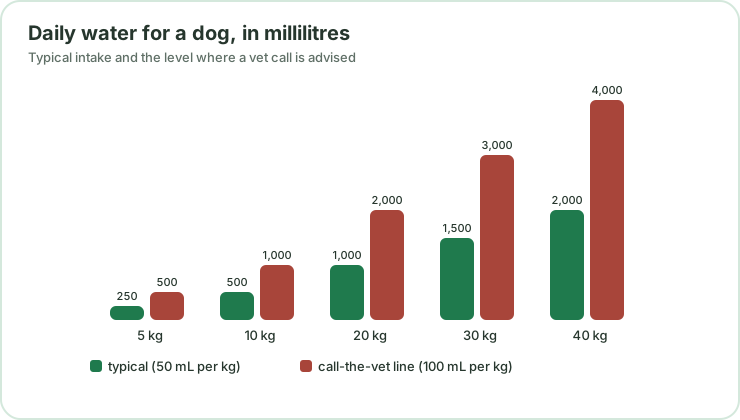
According to the Merck Veterinary Manual, the usual maintenance water need of a dog is about 50 mL per kg of body weight a day, with a normal range of about 40 to 60 mL per kg. Drinking more than about 100 mL per kg a day is called polydipsia and is considered excessive. The Dog Water Intake Calculator compares a measured intake with these limits.
| Dog weight | Typical (50 mL/kg) | Upper normal (60 mL/kg) | Excessive (over 100 mL/kg) |
|---|---|---|---|
| 5 kg (11 lb) | 250 mL | 300 mL | over 500 mL |
| 10 kg (22 lb) | 500 mL | 600 mL | over 1,000 mL |
| 20 kg (44 lb) | 1,000 mL | 1,200 mL | over 2,000 mL |
| 30 kg (66 lb) | 1,500 mL | 1,800 mL | over 3,000 mL |
| 40 kg (88 lb) | 2,000 mL | 2,400 mL | over 4,000 mL |
For the full table and how to measure, see how much water a dog should drink.
Everyday reasons for drinking more
Several normal things raise intake, and it is sensible to rule them out before worrying:
- Hot weather. Dogs drink more when it is warm.
- Exercise. A long walk or hard play makes a dog thirsty.
- Dry food. A dog on kibble drinks more than one on wet food.
- Salty food or treats. Salty snacks can raise thirst.
- Excitement or boredom. Some dogs drink out of habit.
- Medication or a new diet. Ask your vet whether a new medicine or food can increase thirst.
If the dog’s intake is above normal only on hot or busy days and returns to its usual pattern after, that is probably one of these.
How to measure
You can find out what your dog really drinks with a jug.
- Fill the bowl with a measured amount, such as 2 litres, in the morning.
- Take away other bowls, or measure those too.
- After 24 hours, measure what is left and subtract it from the starting amount.
- Allow for spilled water and for water on the beard.
- Repeat on two or three ordinary days and write down the numbers.
Divide by your dog’s weight in kilograms to get mL per kg. A 20 kg dog drinking 2,300 mL is at 115 mL per kg, which is over the excessive line. A 20 kg dog drinking 1,100 mL is at 55, which is normal.
When to see your vet
Contact your vet if:
- Your dog regularly drinks more than about 100 mL per kg a day.
- The increase is sudden or lasts more than a few days without an everyday reason.
- Drinking is accompanied by more urination, accidents in the house, weight loss, tiredness, a change in appetite or vomiting.
- Your dog seems to be getting up at night to drink, which is unusual for it.
- Your dog is drinking far less than normal or refusing water.
- You simply feel something is wrong. You know your dog best.
Many different problems can make a dog thirsty, and a vet can look for them with an examination and tests. Early checks are usually better than waiting.
What the vet will ask and do
- How much your dog drinks, and for how long it has been like this.
- How much it eats, what it eats and how its weight has changed.
- How often it urinates and whether there are accidents.
- Any medicines, supplements or changes in routine.
- A physical examination and, often, tests on blood and urine.
Bring your measurement notes, a list of medicines, and a fresh urine sample if the practice asks for one. The more detail you can give, the faster the vet can narrow down the cause.
What not to do
- Do not restrict water to stop accidents or to reduce intake. A dog needs constant access to fresh water, and restricting it can be harmful. Ask your vet if you are worried about accidents.
- Do not start or stop medicines without advice.
- Do not assume it is age. An older dog drinking more should be checked; it may be treatable.
- Do not wait for other signs if the intake is clearly high.
A worked example
A 20 kg dog’s owner notices the bowl being refilled more often and measures for three days: 2,200, 2,400 and 2,100 mL.
- Average: about 2,230 mL, or 112 mL per kg.
- That is above the 100 mL per kg line, even allowing for spills.
- The weather has been mild and the diet has not changed.
- The owner phones the vet, and brings the figures and a note that the dog has been getting up at night.
- The vet examines the dog and suggests tests to look for a cause.
The measurements turned a vague worry into a clear message for the vet.
Why puppies and older dogs need special attention
Puppies and very small dogs can become dehydrated quickly, so a puppy that drinks little or a lot should be checked sooner. Older dogs are more likely to have conditions that change thirst, and they may drink more than before without an obvious reason. Our guide to dog age explains when a dog counts as senior, and routine check-ups help catch changes early.
Feeding and drinking together
Food and water are linked. A change to dry food raises drinking, and a change to wet food lowers it. If you have recently changed food, compare like with like, and keep a record. Our guide to how much to feed a dog explains feeding amounts and how food type changes with the calculation.
Common mistakes
- Judging intake by how often the bowl is refilled.
- Forgetting that wet food adds water.
- Measuring only on a hot day.
- Limiting water.
- Assuming it is “just age”.
- Waiting weeks before calling the vet.
What a vet visit for thirst may involve
If you take your dog in because it is drinking a lot, expect a series of steps. The details depend on your dog, but typically:
| Step | What happens |
|---|---|
| History | The vet asks about drinking, eating, weight, urination, medicines and changes at home |
| Physical examination | The vet checks weight, gums, hydration, abdomen and general condition |
| Tests | Blood and urine tests are common; the vet explains which and why |
| Discussion | The vet explains what they found, what it means and what to do |
| Plan | This may include more tests, treatment, a change of diet or a recheck |
Do not be alarmed if the vet recommends tests. Many causes of increased thirst can be treated or managed, and finding them early helps. You can help by bringing your measurements and a list of medicines and foods.
Measuring more carefully
If you want to be thorough, here is a better way to measure:
- Use a measuring jug, not a guess.
- Fill the bowl at the same time each day.
- Remove other water sources, such as a fountain, or measure them.
- Count any water the dog drinks from outdoor bowls.
- Subtract the water left in the bowl, and note spills.
- Do it for at least three days, and more if your dog’s intake varies.
Write each day’s measurement and the weather and activity. If you have a dog that drinks from a flowing tap or a fountain, you may need to turn off the supply for a day to measure.
Urine and house-training
Dogs that drink more usually urinate more, which can cause accidents in the house. If a house-trained dog suddenly has accidents or needs to go out more, tell your vet, together with the drinking measurements. Do not scold the dog, because it may not be able to help it. Offer more chances to go out, and ask your vet for advice.
When to act quickly
Call your vet the same day if increased drinking comes with vomiting, lethargy, loss of appetite, a swollen belly, very pale gums or breathing difficulty, or if your dog cannot keep water down. Do not wait for a routine appointment in these cases.
Keeping a short diary
For a week, record the date, the amount of water measured, the weather, the exercise, the food type and any accidents indoors. Add notes on appetite and energy. A clear diary lets your vet see patterns that memory misses. Bring it to the appointment with your measurements converted to millilitres per kilogram.
A summary for your appointment
Bring: the daily intake in millilitres for at least three days, your dog’s weight, the date the thirst began, a list of foods and medicines, notes on urination and accidents and any other changes in energy, weight or appetite. A short, clear summary saves time and helps your vet decide which tests to run first. Take a photo of the bowl and the measuring jug if it helps explain how you measured.
Quick summary
- A healthy dog drinks about 50 mL per kg a day (40 to 60); heat, exercise and dry food raise it.
- More than about 100 mL per kg a day is excessive: over 2 litres for a 20 kg dog.
- Measure intake with a jug over two or three normal days and bring the numbers to the vet.
- See your vet for high, sudden or lasting increases, especially with other changes.
- Never restrict water unless your vet advises it.
- Use the Dog Water Intake Calculator to compare your measurements.
Frequently asked questions
Why is my dog drinking so much water?
It can be hot weather, exercise, dry or salty food, or a medical cause. Measure intake and speak to your vet if it is high or has changed.
How much is too much?
Regularly drinking more than about 100 mL per kg of body weight a day is considered excessive. For a 20 kg dog that is over 2 litres.
Should I limit my dog's water?
No, unless your vet advises it. Dogs need constant access to fresh water.
What should I measure?
The amount you put in the bowl and the amount left after 24 hours, over two or three normal days, allowing for spills.
Does drinking a lot mean my dog is ill?
Not always, but a lasting or sudden increase should be checked, because some health conditions raise thirst.
What will the vet ask?
How much your dog drinks, for how long, how much it eats and weighs, how often it urinates and any other changes. A urine sample may be requested.
Can I do anything at home before the visit?
Measure intake, keep a note of changes and bring it with you. Do not change medicines or diet without asking.
Sources
- Merck Veterinary Manual — maintenance water about 50 mL/kg/day (range 40 to 60); more than 100 mL/kg/day is polydipsia
- NRC (2006) Nutrient Requirements of Dogs and Cats, National Academies Press
Related calculators
- Dog Water Intake CalculatorEstimate how much water your dog should drink in a day and check whether the amount it drinks is normal.
- Pet Weight ConverterConvert your pet's weight between kilograms, pounds, ounces and grams.
- Dog Food CalculatorTurn your dog's daily calorie need into grams and cups of the food you actually feed, using the energy value printed on the bag.
Keep reading
- How Much Water Should a Dog Drink a Day?How much water a dog should drink: about 50 mL per kg a day, a chart by weight, how to measure intake at home and when drinking a lot is a reason to call the vet.
- How Much Should I Feed My Dog? By WeightHow much to feed a dog by weight: a grams and cups chart, how to read the food label, meals per day, adjusting by body condition and common mistakes.
- Dog Years to Human Years: Chart by SizeSee how old your dog is in human years with a size-based chart, the newer epigenetic formula, the dog life stages and why 7 to 1 is wrong.
- Dog Hydration in Hot Weather: A Practical PlanA practical hot-weather hydration plan for dogs: the 50 mL per kg reference, water on walks and in the car, measuring intake and when to call a vet at once.